

Ghibli Style Takes Social Media by Storm: The Blurred Lines Between Creativity and Ownership
Explore the Ghibli style craze on social media, fueled by AI-generated art. Dive into the intersection of creativity, ownership, and the future of art

Explore the Ghibli style craze on social media, fueled by AI-generated art. Dive into the intersection of creativity, ownership, and the future of art

A Journey Through Bengal’s Textile Masterpiece In eastern India, West Bengal weaving plays an important...

Imagine wearing a piece of clothing that tells fascinating stories! In the beautiful eastern Indian...

Kantha stitch, an exquisite embroidery technique from India and Bangladesh, has been transforming recycled fabric...

Through her poignant and unflinching prose, Han Kang illuminates the darkest corners of human experience, revealing the resilience and beauty that can emerge from even the most profound trauma.

Renowned artist Thota Vaikuntam’s latest exhibition, “Redefining the Cultural Gaze,” showcases his captivating depictions of...

In a world where stories shape our understanding of identity, history, and humanity, Toni Morrison...

Reviving Ancient Traditions: China's Feidu Wax Dyeing Process
In a world dominated by modern technology, it's heartening to see artisans preserving ancient traditions. One such example is China's feidu wax dyeing process, an intricate craft with roots dating back centuries. This labor-intensive technique has been passed down through generations, keeping alive the rich cultural heritage of China.
Feidu, also known as "batik" in other cultures, originated in ancient China during the Han Dynasty (206 BCE - 220 CE). This traditional method of textile dyeing involves applying wax to specific areas of fabric, creating unique patterns and designs.
With precision and patience, the artisans apply melted wax to intricate designs on silk or cotton fabrics. The waxed areas resist dye, resulting in stunning patterns and colors.
Preparing the fabric: Artisans select high-quality silk or cotton fabrics.
Applying wax: Melted wax is carefully applied to desired areas using a brush or tool.
Dyeing: The fabric is immersed in dye, with waxed areas resisting color.
Removing wax: The wax is melted off, revealing the original fabric color.
Repeating the process: Multiple layers of wax and dye create intricate designs.
Feidu wax dyeing is more than just a craft; it's a window into China's rich cultural past. Artisans work tirelessly to preserve this tradition, passing skills down to younger generations.
In today's fast-paced world, feidu wax dyeing offers:
Sustainable fashion: Eco-friendly, handmade textiles reduce waste.
Cultural exchange: Feidu promotes cross-cultural understanding and appreciation.
Artistic expression: Unique designs inspire contemporary artists.
China's feidu wax dyeing process is a testament to the country's dedication to preserving ancient traditions. As we marvel at the artisans' skill and patience, we're reminded of the importance of cultural heritage. Let us celebrate and support these masters of traditional craftsmanship.
#FeiduWaxDyeing #AncientTraditions #ChineseCulture #SustainableFashion #CulturalHeritage #HandmadeTextiles #ArtisanalCraftsmanship
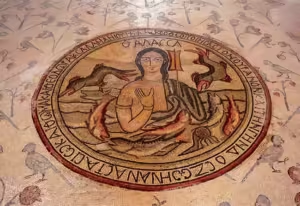
Step into a world where tiny stones tell stories that have echoed through centuries. Welcome...

As they reached the summit, Kyra saw something that made her blood run cold. A figure, tall and imposing, standing at the edge of the cliff. Its eyes were fixed on her, and Kyra was frozen in terror. Her friends were oblivious to the danger, but Kyra knew they had to get out of there, fast.

Search for SheSight Magazine on Playstore and AppStore Today and Download for FREE!!

Take the ShePower Assessment and find out which areas of your life need a glow-up!
Uncover your strengths
Spot what’s holding you back
Get a FREE personalized growth plan
It’s quick, eye-opening, and made just for YOU. Tap into your power. Start now.


