When the Crown Feels Heavy—Milla Magee’s Brave Wake-Up Call
By SheSight Editorial Team
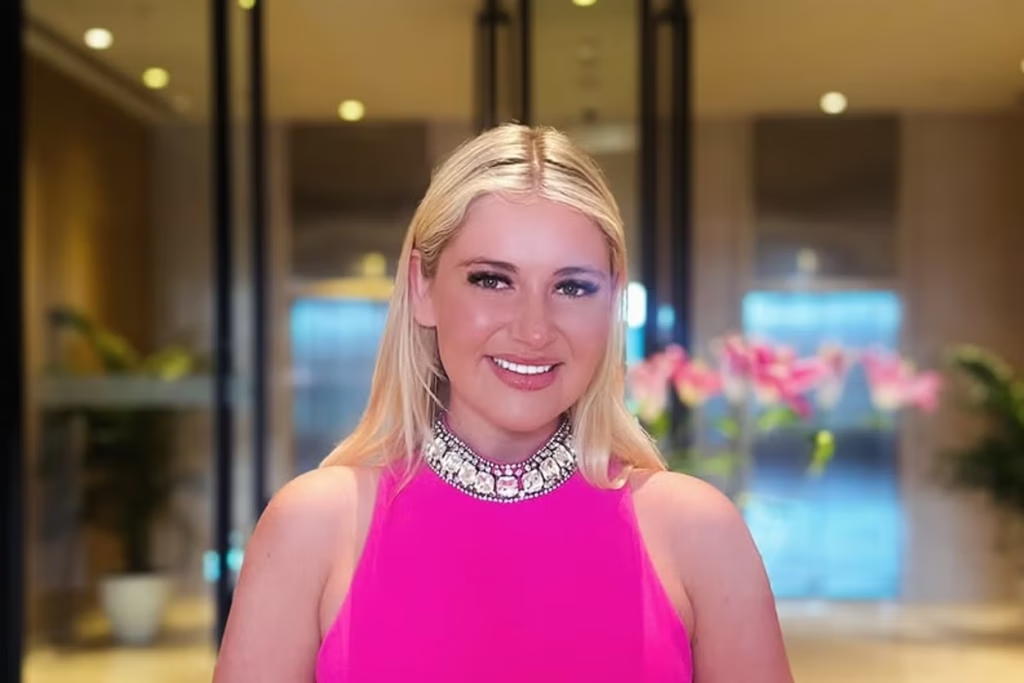
Pic: Milla Magee / Instagram
When beauty meets conscience, the world listens. Milla Magee, Miss England 2024, has ignited an important conversation about empathy, privilege, and the urgent need for reform within the global pageant industry. Her recent experience at the Miss World pageant in Hyderabad, India, has not only made headlines but has also sparked a broader debate about the values that such international competitions should embody in the 21st century.
A Journey Beyond Glamour
For many, the Miss World pageant conjures images of dazzling gowns, sparkling crowns, and poised contestants vying for a coveted title. But for Milla Magee, her journey to India revealed a starkly different reality—one that challenged her ideals and forced her to confront uncomfortable truths about inequality, exclusion, and the true meaning of “beauty with a purpose.”
In a candid interview, Magee described her shock and discomfort at witnessing the harsh realities of poverty and class division in Hyderabad. “Being out in India, I’d never experienced going to somewhere like that before. Obviously there’s a very dramatic class system out there and I hadn’t witnessed, you know, first hand, that sort of poverty before,” she shared.
Each evening, as she and other contestants were driven through the city’s streets in coaches, Magee was struck by the contrast between the opulence of the pageant and the daily struggles of those living in slums or sleeping on the sidewalks. “Seeing these people lying on the streets, seeing these people that are living in slums, this is real life, this isn’t a movie,” she said.
The Cost of Conformity
Magee’s discomfort was not limited to what she saw outside the pageant walls. Inside, she found herself questioning the values and priorities of the competition itself. While some contestants embraced the glamour and the opportunity to mingle with dignitaries, Magee felt increasingly alienated by the lack of genuine engagement with the causes she cares about.
“There’s clearly favoritism amongst some girls because I didn’t get the opportunity to speak about my beauty with a purpose once or what I’m campaigning for,” she revealed. “I wasn’t there to entertain conversations with dignitaries that have helped the system. I’m there to talk about what I’m championing for and what I believe in and what I believe is right.”
Her desire to connect with those in need was met with resistance. Magee recounted an incident where she tried to offer food to someone outside the venue, only to be told she could not communicate with them because they were “classed as lower” and she had to return to the coach. “That is not what Miss World stands for for me,” she asserted.
For Magee, the experience became a crisis of conscience. She realized that staying any longer would mean “conforming” to a system that contradicted her values. “I’m not staying true to myself, which is, and I’m going against everything that I advocate for. If I’d stayed out there any longer, I was conforming,” she said.
Her decision to speak out was not made lightly. Magee acknowledged that many contestants are happy to embrace the pageant’s traditions and rituals, and she respects their choices. But for her, the disconnect between the pageant’s stated mission and its actual practices was too great to ignore.
“If I can share my story and if I can share this now and hopefully encourage and give a voice to the voices that feel voiceless… But I’m not saying that Miss World isn’t a system that can’t fit into this world. But it needs to evolve and it needs to change for it to fit into today’s society.”
Miss World Organization Responds
The Miss World Organization, in response to the growing media attention and Magee’s statements, issued an official statement defending their event and practices. The organization emphasized their commitment to social causes and the “Beauty with a Purpose” ethos, highlighting the charitable work carried out during the pageant and their engagement with local communities. They stated, “Miss World has always been about empowering women and supporting humanitarian causes. We are proud of the work we do and the opportunities we provide for contestants to make a difference.”
However, the statement did not directly address Magee’s specific allegations about favoritism, restrictions on contestant interactions with local communities, or the broader issues of class and privilege she raised. This has left many observers and supporters feeling that the response was more of a corporate defense than a meaningful engagement with the concerns Magee brought to light.
Facing the Backlash: Online Bullying and Misogyny
Taking a stand, especially in the public eye, comes at a cost. Since sharing her story, Milla Magee has faced a torrent of online abuse and bullying. Social media platforms have become battlegrounds, with some users applauding her courage, but many others attacking her character and motives.
The vitriol has been intense. Detractors have accused her of being “mentally sick,” “weak,” or “unable to handle the pressure.” Some have gone so far as to say she “chickened out” or is using her story for attention. Others have questioned her mental health, using deeply stigmatizing language to try to silence her voice.
This backlash is a sad reminder of the double standards women face when they refuse to conform or speak out against powerful institutions. Instead of engaging with her arguments or the issues she raised, critics have resorted to personal attacks, attempting to undermine her credibility and shut down the conversation.
Yet, Magee’s willingness to speak out in the face of such hostility only underscores the courage of her convictions. She has become a symbol not just for pageant reform, but for every woman who has been bullied, dismissed, or belittled for daring to challenge the status quo.
The Ripple Effect
Magee’s boldness has resonated with many. In a world where public figures are often expected to toe the line and avoid controversy, her willingness to challenge the status quo is both refreshing and necessary. By refusing to remain silent, she has brought attention to issues that are too often glossed over in the pursuit of spectacle and entertainment.
Her story is a reminder that true beauty is not about appearance, but about character—the courage to stand up for what is right, even when it is uncomfortable or unpopular. Magee’s actions embody the very ideals that pageants like Miss World claim to promote: compassion, integrity, and a commitment to making a positive difference in the world.
Magee’s experience has also highlighted the urgent need for reform within the pageant industry. While Miss World and similar competitions have made efforts in recent years to emphasize social impact and “beauty with a purpose,” Magee’s account suggests that there is still a long way to go.
For pageants to remain relevant and meaningful in today’s society, they must do more than pay lip service to social causes. They must create spaces where contestants can authentically engage with the issues they care about, and where their voices are valued and respected—not just their appearances.
This means rethinking not only the structure of the competitions, but also the environments in which they are held. It means recognizing and addressing the inequalities that exist both within and outside the pageant world, and ensuring that all participants—regardless of background or beliefs—are treated with dignity and respect.
Despite the criticism, Magee stands by her decision. As she has said, “If I can share my story and if I can share this now and hopefully encourage and give a voice to the voices that feel voiceless…” Her courage serves as a call to action—not just for the pageant industry, but for all of us. It challenges us to look beyond the surface, to listen to those who are marginalized or silenced, and to use our platforms—however large or small—to advocate for a more just and compassionate world.
Its time to redefine Beauty with a Purpose

Milla Magee’s experience at Miss World is a powerful reminder that true beauty lies in empathy, integrity, and the willingness to stand up for what is right. Her bold stand has opened the door for important conversations about privilege, inequality, and the need for systemic change—not just in pageants, but in society as a whole.
As we celebrate her courage, let us also reflect on how we can each play a part in building a world where everyone’s voice is heard, and where “beauty with a purpose” is more than just a slogan—it is a way of life.
For more stories of women making a difference, follow SheSight Magazine.